Premises
  +971 56 538 8844
  info@trustwell.ae

The United Arab Emirates has long been a magnet for global talent. With a workforce drawn from over 190 nationalities, UAE employers face a unique challenge: attracting, retaining, and motivating employees in one of the world’s most competitive talent markets. Compensation remains important, but research increasingly shows that the physical office environment — and the amenities within it — play a decisive role in how satisfied, engaged, and loyal employees feel. This blog explores the key office amenities shaping employee satisfaction across the UAE, why they matter in this regional context, and what forward-thinking employers are doing to get it right.
1.The UAE Workplace Context: Why Amenities Matter More Here?
The UAE’s professional landscape is distinct. Long commutes across cities like Dubai and Abu Dhabi, an outdoor climate that is extreme for much of the year, and a multicultural workforce with diverse expectations all mean that the office itself must compensate with comfort, convenience, and community.
A 2023 survey by Mercer found that UAE employees rank workplace environment among the top five factors influencing their decision to stay with or leave an employer. Meanwhile, JLL’s regional workplace research highlights that 68% of UAE-based employees say physical office quality directly affects their productivity and overall job satisfaction. Unlike in many Western markets where remote work has displaced the office, the UAE’s professional culture still centers heavily on in-person presence. This means the quality of the physical workspace carries even greater weight.
2.Top Office Amenities and Their Influence on Employee Satisfaction
- Ergonomic Workstations & Comfortable Furniture
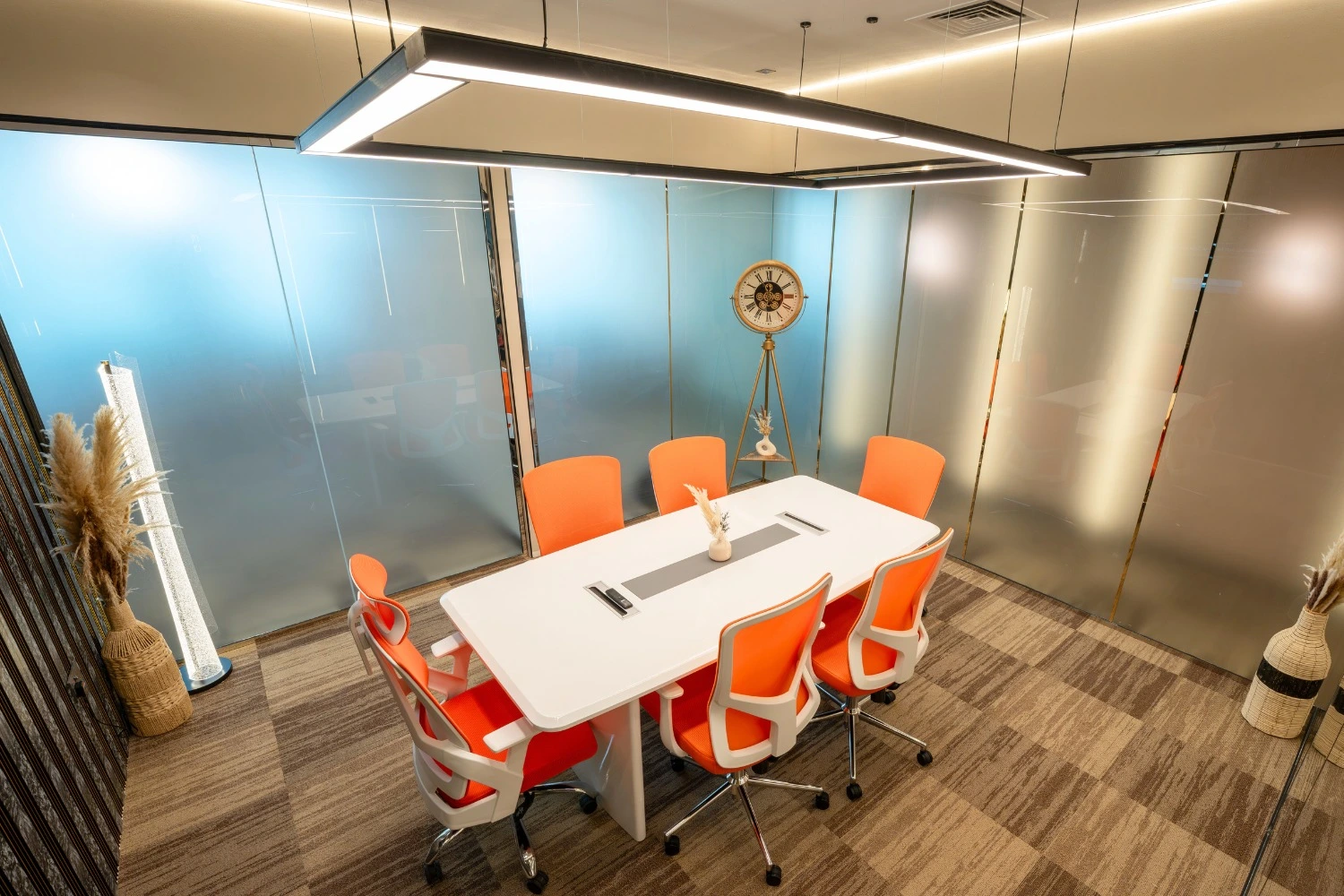
The most fundamental amenity is the workstation itself. Ergonomic seating, height adjustable desks, and well-lit workspaces reduce physical fatigue and musculoskeletal issues — problems particularly common in office-heavy sectors like finance, legal, and technology, all prominent in the UAE. Employees who rate their workstation comfort highly are significantly less likely to report burnout or physical discomfort, both of which are strongly correlated with turnover. - Temperature Control & Air Quality
In a country where outdoor temperatures regularly exceed 40°C, indoor climate control is not a luxury — it is essential. Poorly ventilated or inconsistently cooled offices are among the most frequently cited grievances in UAE workplace surveys. High-quality HVAC systems, combined with good air filtration, are strongly linked to reduced absenteeism and improved cognitive performance. Buildings with LEED or WELL certification, which include strict air quality standards, have seen measurable improvements in reported employee wellbeing. - Food & Beverage Facilities
Access to quality dining options — whether in-building cafeterias, subsidized meal programs, or well-stocked pantry areas — has a disproportionately large impact on employee sentiment. In the UAE, where lunch breaks are often limited and restaurant options near office clusters can be expensive, on-site food facilities are particularly valued. Companies that provide healthy, varied meal options report higher scores on employee satisfaction surveys and notably better afternoon productivity. - Wellness Facilities: Gyms, Prayer Rooms & Quiet Zones
The UAE workforce is culturally diverse, and workplaces that reflect this diversity in their facilities see stronger inclusion scores. Dedicated prayer rooms are not just a legal and cultural consideration — they signal genuine respect for employees’ needs. Similarly, on-site gyms or subsidized fitness memberships are increasingly common in premium UAE office buildings, particularly in DIFC, Abu Dhabi Global Market, and Dubai Internet City. Quiet zones and relaxation rooms address the growing issue of sensory fatigue in open plan offices, which dominate modern UAE workplaces. Employees with access to quiet spaces for focused work or brief rest report lower stress levels and greater ability to concentrate on complex tasks. - High-Speed Connectivity & Technology Infrastructure
For a workforce that is highly tech-literate and often managing regional or global responsibilities, reliable and fast internet is table stakes. But modern UAE employees also expect seamless video conferencing facilities, smart meeting rooms with intuitive booking systems, and IT support that is responsive. Offices that provide this infrastructure consistently rank higher in engagement surveys, particularly among younger professionals in the tech and media sectors.
3.Amenities at a Glance: Impact Summary
| Amenity / Factor | Impact on Satisfaction |
|---|---|
| Ergonomic Furniture & Workstations | Reduces fatigue; lowers turnover intent |
| Temperature Control & Air Quality | Boosts cognitive performance & reduces sick days |
| On-Site Food & Beverage Facilities | Improves afternoon productivity & retention |
| Prayer Rooms & Quiet Spaces | Strengthens inclusion & reduces stress |
| Fitness / Wellness Facilities | Lowers absenteeism; improves morale |
| High-Speed Internet & Smart Tech | Increases engagement, especially among Gen Z |
| Parking & Commute Support | Reduces daily stress; key retention factor |
| Collaborative Zones & Social Spaces | Enhances team cohesion & innovation |
4.The Link Between Amenities and Retention
Employee turnover is expensive in any market, but particularly so in the UAE, where visa sponsorship, relocation costs, and the time to recruit internationally-qualified talent add significantly to replacement costs. Studies in the GCC context suggest that replacing a mid-level professional can cost between 50% and 150% of their annual salary when all factors are considered. Amenities function as a tangible signal of employer investment in employee wellbeing. When employees feel that their physical comfort, health, and cultural needs are taken seriously, they develop stronger organizational loyalty — a psychological mechanism sometimes described as the reciprocity effect. Put simply: organizations that look after
their people tend to have employees who look after the organization. This is especially relevant in UAE Free Zones, where competition for skilled professionals is intense. Employers in DIFC, Masdar City, twofour54, and similar zones are increasingly using office amenity packages as a recruitment differentiator, listing them prominently in job postings and during onboarding.
5.What Employees Want: Generational Differences in the UAE?
The UAE’s workforce spans five generations, and amenity preferences vary meaningfully across them:
- Gen Z professionals (born 1997–2012) prioritize collaborative spaces, fast technology, and sustainability features. They are more likely to factor office design into job acceptance decisions.
- Millennials (born 1981–1996) value work-life balance amenities: on-site gyms, flexible seating, and food options that cater to diverse dietary preferences. Mental health and quiet zones rank highly.
- Gen X professionals (born 1965–1980) tend to prioritize functional comfort: reliable technology, ergonomic setups, and private meeting spaces for client facing work.
- Baby Boomers still active in the workforce favor structured environments with strong administrative support, clear signage, and accessible facilities. Employers designing amenity strategies in the UAE need to account for this diversity rather than defaulting to a one-size-fits-all approach. The most effective offices incorporate flexible spaces that serve different working styles and preferences
simultaneously.
6.Recommendations for UAE Employers and Office Tenants
- Conduct a workplace survey before renewing or relocating your office lease. Identify which amenities your team values most rather than assuming based on market trends.
- Prioritise WELL or Fitwel-certified buildings when evaluating office space in the
- UAE. These certifications indicate independently verified standards for air quality,
- lighting, and wellness infrastructure.
- Budget for fit-out beyond aesthetics. Ergonomic furniture and quality temperature control have among the highest measurable ROI of any office investment in terms of productivity and absenteeism reduction.
- Ensure cultural inclusivity in your amenity offering. Prayer rooms, gender-neutral spaces, and food options that accommodate halal, vegetarian, and varied dietary needs are minimum expectations in the UAE market.
- Communicate your amenity offering actively. Many employees are unaware of all the facilities available to them. Regular internal communication about available amenities increases utilization and perceived satisfaction.
Final Thought
In the UAE’s competitive talent market, the office is no longer simply a place to work — it is part of your employee value proposition. The amenities you provide communicate to your team, and to prospective hires, exactly how much you value their time, comfort, and wellbeing. Getting them right is no longer optional: it is a strategic imperative.